



09-15-2009, 06:38 PM
Tetters I am happy you cannot notice the difference in thickness of the new vertical part. it mean all my work was worth it.I spent an hour filing the broken side down from 0.020" thick to just a little over .005" thick. I also marked the inside of the new vertical part and filed down the area that would be solder to the original side piece. After all that the repaired side is just a little over 0.003' thicker than the unbroken side. I might have been able to get it closer but the new part was to easy to bend while filing it.
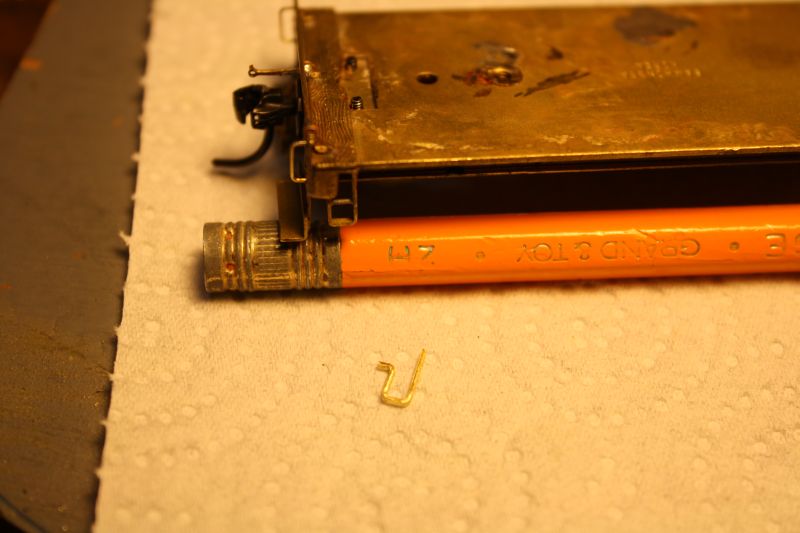
Today I decided to fix the broken coupler cut lever. I have actually gotten good at bending new one freehand ( no jig ). It seems every locomotive I have rebuilt so far needs at least one new one. Seeing as I do not like replacing perfectly good stanchions I start with a slightly longer piece of brass wire ( 0.015" ) than needed and bend one side to shape. I then slide the new piece through the stanchions and bend the other end in place on the tender. my first attempts at this method on my CNR 2-8-0 rebuild ended with me having to do it several times before I got it right. By the time I got to my 4-6-2 pacific I could do it first try and that is how it went on the ten wheelers tender.
I also replaced the horizontal handrail bar above the coupler cut lever with a new piece of straight 0.020" brass wire.
The next repair was to make a new stirrup step for the left rear side of the tender.
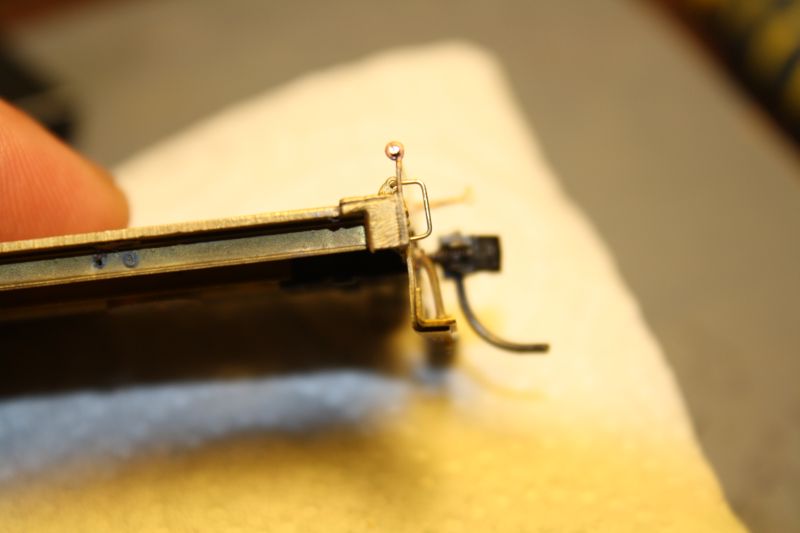
Tender side with missing step.
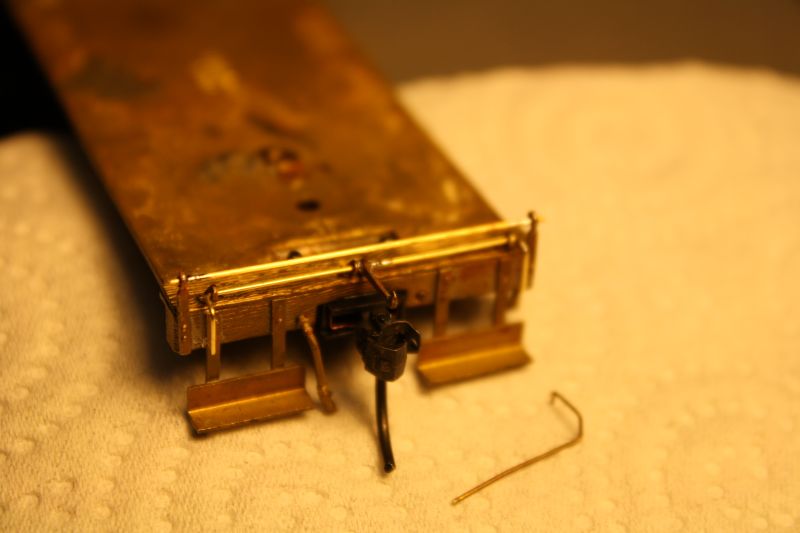
New step bent from some small flat brass bar next to tender side with original step still in place. I still have to make a small rung for the new step. This was a fun part to make is it is real small.
Wayne R
Today I decided to fix the broken coupler cut lever. I have actually gotten good at bending new one freehand ( no jig ). It seems every locomotive I have rebuilt so far needs at least one new one. Seeing as I do not like replacing perfectly good stanchions I start with a slightly longer piece of brass wire ( 0.015" ) than needed and bend one side to shape. I then slide the new piece through the stanchions and bend the other end in place on the tender. my first attempts at this method on my CNR 2-8-0 rebuild ended with me having to do it several times before I got it right. By the time I got to my 4-6-2 pacific I could do it first try and that is how it went on the ten wheelers tender.
I also replaced the horizontal handrail bar above the coupler cut lever with a new piece of straight 0.020" brass wire.
The next repair was to make a new stirrup step for the left rear side of the tender.
Tender side with missing step.
New step bent from some small flat brass bar next to tender side with original step still in place. I still have to make a small rung for the new step. This was a fun part to make is it is real small.
Wayne R